
What Happens During a Roof Replacement? What Cardiff Homeowners Can Expect
June 24 2026
Once you’ve decided a new roof is the right option, the next question is usually simple: what actually happens next?
A roof replacement is a significant project, but it follows a well-established process. Knowing what to expect at each stage can help homeowners feel more confident before work begins.
This guide explains how a typical roof replacement is carried out across Cardiff and South Wales, from the initial survey through to the finished roof.
Step 1: The Roof Survey and Quote
Before any work starts, a proper roof survey is essential.
The roof will be inspected to assess the condition of the existing covering, roof structure, chimney details, and any leadwork. Measurements are also taken to ensure the quote accurately reflects the scope of work required.
For older Cardiff properties, particularly Victorian and Edwardian homes, this stage is especially important as issues are not always visible from ground level.
Once the survey is complete, you’ll receive a written quote covering materials, labour, scaffolding, and waste removal.
Step 2: Scaffolding Installation
Scaffolding is normally erected before roofing work begins and remains in place until the project is complete.
For a typical Cardiff terraced house, scaffold installation is usually completed within a day. While homeowners do not need to be present, it is often helpful to let neighbours know beforehand, particularly on streets with limited access.
Step 3: Removing the Existing Roof
The first stage of the roofing work involves removing the existing slates or tiles along with the old underlay.
This is usually the noisiest part of the project and often takes around a day on a standard terraced property.
Once the old covering has been removed, the roof structure can be inspected more closely. If any damaged timbers or other issues are discovered, they can be addressed before the new roof is installed.
Step 4: Installing the New Underlay and Battens
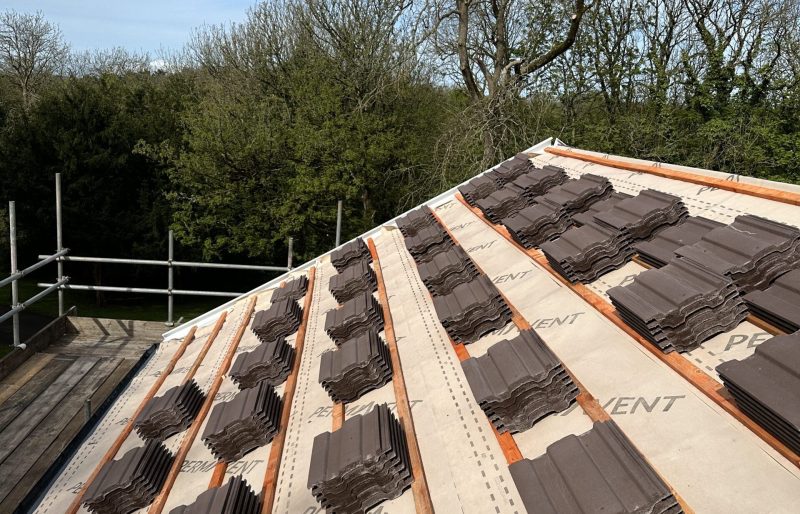
After the structure has been checked, a modern breathable membrane is fitted across the roof.
This provides an additional layer of protection against wind and rain while helping moisture escape from the roof space. On older Cardiff properties, modern breathable membranes can also help improve ventilation within the roof structure.
Timber battens are then fixed across the roof to create the framework for the new slates or tiles.
Step 5: Installing the New Roof Covering
The new slates or tiles are installed from the bottom of the roof upwards.
The length of this stage depends on the size of the property and the roofing material being used. Welsh slate generally takes longer to install than concrete tiles due to the additional craftsmanship involved.
Many Cardiff homeowners choose Welsh slate for period properties because it suits the character of older homes and offers excellent long-term durability.
Step 6: Chimneys, Valleys and Leadwork
Most roof replacement projects also involve work around chimneys, valleys, and flashing details.
Lead valleys may be repaired or replaced, chimney flashings are checked and renewed where necessary, and any roof-to-wall junctions are properly weatherproofed. These areas are often where leaks develop, particularly on older properties.
Many Cardiff homes still have ageing chimney details and leadwork that require attention during a roof replacement, making this stage just as important as installing the new roof covering itself.
Step 7: Final Checks and Finishing Touches
Before the scaffold is removed, the roof is thoroughly checked to ensure everything has been completed correctly. Fixings, flashing details, ridge lines, and roof finishes are all inspected before the project is signed off.
Gutters, fascias, soffits, and other finishing details are inspected as part of the final stage.
Once the roof has passed final checks, the scaffold is removed and the project is complete.
How Long Does a Roof Replacement Take?
For a typical Cardiff terraced house, a roof replacement usually takes around five to seven days from scaffold installation to completion.
Larger or more complex properties may take longer, particularly where multiple chimneys, extensive leadwork, or structural repairs are involved.
Weather conditions can also affect the schedule, as roofing work is normally carried out during suitable weather.
What Do Homeowners Need to Do?
Very little preparation is usually required.
It helps to keep access clear around the property and to be aware that some noise should be expected during the removal stage.
Most homeowners remain in the property throughout the project, and there is usually no need to move out while the work is being carried out. On many Cardiff terraces, the strip-out stage is usually the most disruptive part of the project. Once the new roof is being installed, most homeowners find day-to-day life returns to normal fairly quickly.
Thinking About Getting Started?
Every roof is different, and the only reliable way to get an accurate figure is with a proper inspection and written quote.
If you’ve already decided a new roof is the right option, our guide on how much a new roof costs in Cardiff explains the typical costs involved for different property types across South Wales.
If you’re still unsure whether a replacement is necessary, it’s worth understanding the signs your roof may need replacing.
Get in touch today to arrange a survey or request a quote, with no obligation to proceed.
We cover Cardiff and surrounding areas including Roath, Canton, Pontcanna, Penarth, Barry, Llandaff, Pontypridd, and across the Vale of Glamorgan.
By Oaks Digital SEO