
What Is Lead Flashing and Why Does It Fail?
July 8 2026
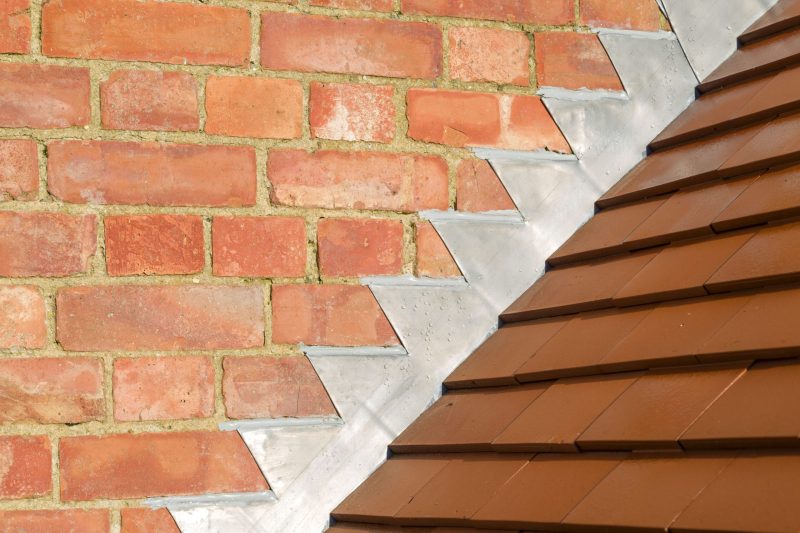
If you have noticed a damp patch on your ceiling near a chimney breast, or a brown stain appearing on an upstairs wall after heavy rain, the first instinct is usually to assume the worst — a failing roof. In many cases, though, the tiles and slates are perfectly serviceable. The problem is often the lead flashing.
Lead flashing is one of the most important parts of a domestic roof, and one of the least talked about. When it works, you will never give it a second thought. When it fails, the signs can range from a faint damp smell to significant water damage inside your home.
What Lead Flashing Actually Is
A roof is not a single surface. It is a collection of surfaces that meet walls, chimneys, dormers, extensions and other structures at various points. Tiles and slates are good at shedding water downwards, but they cannot seal the gaps where a roof meets a vertical structure. That is what lead flashing is for.
Lead flashing is a shaped strip of lead sheet installed at these junctions to create a watertight seal. It is tucked into the brickwork mortar joint, known as a chase, and dressed down over the tiles or slates below to direct water away from the gap.
On a typical Cardiff terrace or semi-detached property, you will find lead flashing in several locations:
- Around the chimney stack
- Where a rear extension meets the main house wall – a detail commonly found on many flat roof extensions across Cardiff
- In roof valleys where two roof slopes meet
- Around dormers and roof windows
Lead has been used in UK roofing for centuries. When properly installed, it is malleable enough to be shaped around complex junctions, durable enough to last for decades, and resistant to corrosion. Many Cardiff homes still have functioning lead flashing that was installed when the properties were originally built.
Why Lead Flashing Fails
Most lead flashing problems do not happen suddenly. They develop gradually, often over many years, before a homeowner notices anything wrong.
Thermal Movement Over Time
Lead naturally expands and contracts with temperature changes. Over decades of warm summers and cold, wet Welsh winters, this movement can cause older lead to crack, split or pull away from its fixings. South Wales experiences regular freeze-thaw cycles and periods of wind-driven rain, which can accelerate wear on ageing leadwork.
Poor Original Installation
Not all lead flashing is installed to the same standard. Incorrect fixing methods, insufficient overlaps, unsuitable materials or flashings that were not properly chased into the mortar joint can all shorten its lifespan.
Mortar Deterioration
Lead flashing around chimneys is often secured within mortar joints. As mortar deteriorates over time, water can begin to track behind the flashing, even when the lead itself remains in reasonable condition.
Previous Sealant Repairs
This is a common issue on older Cardiff properties. A leak appears, sealant is applied as a quick fix, and the problem seems resolved for a short period. Unfortunately, sealant rarely addresses the underlying cause and the leak often returns.
Storm Damage
Strong winds can lift or displace lead flashing, particularly around chimneys and roof valleys. Following severe weather, flashing should always be considered as a possible source of water ingress.
Building Movement
Older buildings naturally settle over time. Small movements between roof structures and walls can gradually create openings where water is able to enter.
Warning Signs Cardiff Homeowners Should Know
Lead flashing problems often provide warning signs before significant damage occurs.
Common signs include:
- Damp patches or brown stains on ceilings and upper-floor walls
- Staining that becomes worse during heavy or wind-driven rain
- Recurring damp problems in the same location
- Visible lifting or separation of lead around a chimney
- Crumbling mortar where the chimney meets the roof
- A persistent musty smell in rooms below the roofline
While none of these signs confirm a flashing issue on their own, they are all worth investigating.
What Happens If You Leave It?
Water ingress caused by failed flashing is rarely dramatic at first. The damage often develops slowly, making it easy to postpone repairs.
Over time, moisture can affect roof timbers, insulation, plasterwork and internal finishes. What begins as a relatively straightforward flashing repair can eventually develop into a more extensive roofing or internal repair project.
A failed chimney flashing that goes unaddressed for several years can eventually lead to saturated roof timbers, damaged plasterwork and mould growth in the room below. In many cases, the resulting repair work is far more extensive than the original flashing repair would have been.
Repair or Replace?
Not all lead flashing problems require full replacement.
Repair may be suitable where the flashing remains in generally good condition but has lifted slightly, where pointing has deteriorated, or where there is a small isolated defect.
Replacement is more likely when the lead has cracked in multiple areas, previous repairs have repeatedly failed, or the flashing has reached the end of its serviceable life.
A professional inspection will determine which option is most appropriate for your roof.
Not Sure What You Are Looking At?
If you have noticed any of the warning signs above, arranging a professional inspection is often the quickest way to identify the source of the problem.
Cardiff & Vale Roofing carries out lead flashing repairs and replacements across Cardiff and South Wales, including work around chimney stacks, roof junctions and extensions.
We cover Cardiff and surrounding areas including Roath, Canton, Pontcanna, Penarth, Barry, Llandaff, Pontypridd and the wider Vale of Glamorgan.
Get in touch today to arrange a survey or request a quote.
By Oaks Digital SEO