
Rooflight or Roof Lantern: Which Is Right for Your Cardiff Home?
July 6 2026
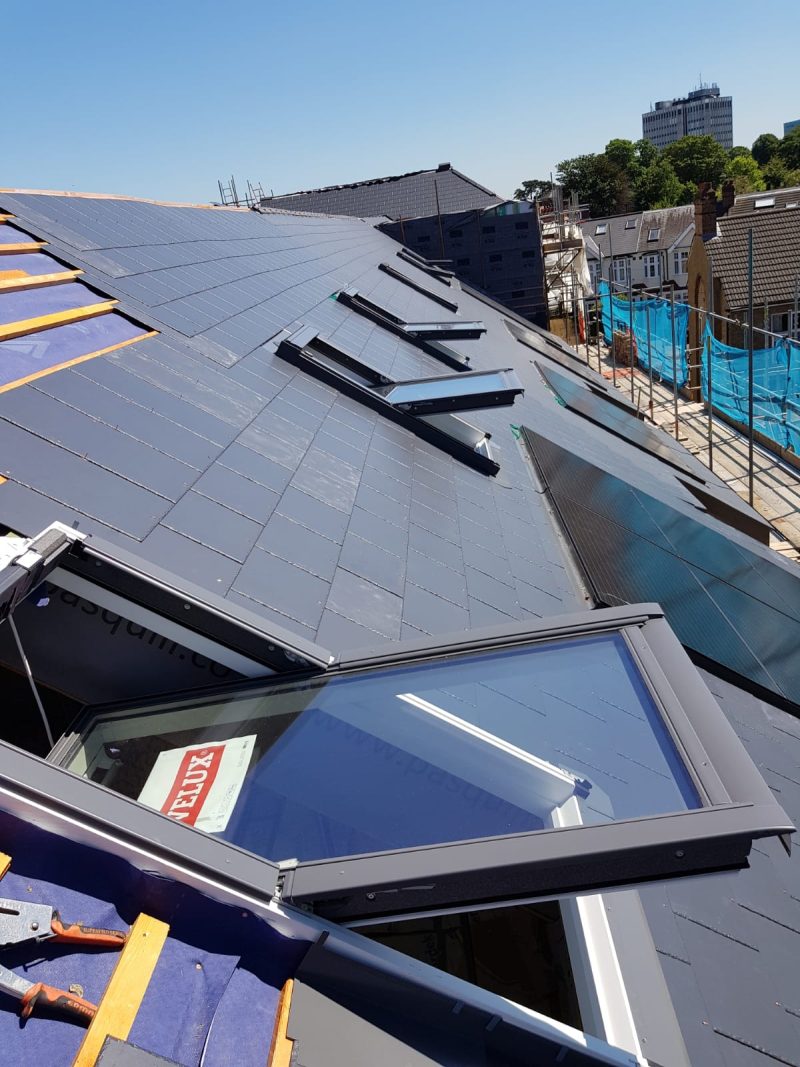
Both rooflights and roof lanterns are designed to bring natural light into your home. But they work differently, suit different types of roof, and come at very different price points.
For most Cardiff homeowners, the decision comes down to one simple starting point: what kind of roof are you fitting it into?
What Is the Difference Between a Rooflight and a Roof Lantern?
A rooflight is installed within the surface of the roof itself — either flush with a flat roof or set into the slope of a pitched roof. It introduces natural light without changing the overall profile of the building significantly. Rooflights are available as fixed units, manually operated opening units, and electrically controlled versions.
A roof lantern is a raised glazed structure that sits above a flat roof, extending upwards to create a glass feature above the ceiling line. Because the glass panels are angled on multiple sides, a roof lantern typically admits considerably more light than a standard flat rooflight of the same footprint. Roof lanterns are most often seen over kitchen extensions, open-plan living areas, and orangeries.
The key practical difference is this: rooflights can be installed on both flat and pitched roofs, while roof lanterns are designed for flat roofs. Standard roof lanterns are not suitable for most pitched roof installations. While specialist solutions do exist in some circumstances, a flat roof extension is usually required before a roof lantern can be installed.
Which Suits Your Cardiff Property?
The right option usually comes down to the type of roof you have.
For properties with a traditional pitched roof, such as many Cardiff terraces and semis, a rooflight is usually the most practical solution. They work particularly well for loft conversions, attic rooms, and upper-floor spaces where additional natural light is needed.
If your property has a flat roof extension, both rooflights and roof lanterns are potential options. A flat rooflight provides a clean, understated appearance, while a roof lantern creates more of a feature and typically allows additional light into the room.
If you’re planning a new extension, it’s often more cost-effective to incorporate a rooflight or roof lantern into the design from the start rather than adding one later.
For loft conversions, rooflights remain the most common choice, providing natural light and ventilation without significantly altering the appearance of the roof.
Which Option Is Best for Natural Light?
A roof lantern will generally admit more natural light than a flat rooflight of the same footprint because the raised, angled glazing can capture light from multiple directions throughout the day.
That said, a well-sized flat rooflight can still transform a dark room and is often more than sufficient for many Cardiff kitchen extensions and rear additions.
Both options can make a significant difference to a dark room. What matters most is choosing the right size, positioning it correctly, and selecting a glazing specification that suits the space.
Fixed, Opening, or Electric — What Are the Options?
Both rooflights and roof lanterns are available as fixed, manually opening, or electrically operated units.
Fixed units are the most cost-effective option and are designed purely to bring natural light into the room. Opening units provide additional ventilation and are often a popular choice for kitchens, bathrooms, and utility spaces.
Electric models offer added convenience and may include features such as automatic rain sensors.
For many Cardiff homeowners, the decision comes down to whether additional ventilation is needed as well as natural light.
Planning Permission in Cardiff
In many cases, rooflights and roof lanterns can be installed under permitted development in Wales.
However, important exceptions apply. Rooflights and roof lanterns are not permitted development in conservation areas in Wales, which means a planning application will normally be required before work can proceed. This is particularly relevant in parts of Cardiff, including Pontcanna, Llandaff, and Roath.
Listed buildings and properties affected by Article 4 directions may also require additional consent.
If you’re unsure whether restrictions apply to your home, it’s worth checking before work begins. For a more detailed explanation of planning rules and related considerations, see our rooflight and roof lantern cost guide.
What About Maintenance?
Modern rooflights and roof lanterns are generally low maintenance when installed correctly.
The main areas to keep an eye on are the seals and flashings around the unit, as these are the parts most likely to develop issues over time.
If you notice signs of water ingress, condensation, or damp patches around an existing installation, it is worth having it inspected before the problem becomes worse.
Questions Worth Answering Before You Decide
Before speaking to a contractor, it helps to consider a few practical questions:
- Is the roof you are fitting it into flat or pitched?
- If it is flat, how large is the opening you are working with?
- Do you want the unit to open for ventilation?
- Is your property listed or within a conservation area?
- Is this part of a larger extension or renovation project?
Not Sure Which Option Is Right for You?
Choosing between a rooflight and a roof lantern isn’t always straightforward. The right solution depends on the type of roof you have, the amount of natural light you’re looking for, and how you use the space below it.
A site survey is usually the quickest way to work out which option is likely to suit your property best.
Whether you’re planning a loft conversion, upgrading an existing extension, or designing a new living space, Cardiff & Vale Roofing can help you choose the most suitable option for your home. Get in touch today to arrange a survey or request a quote, with no obligation to proceed.
By Oaks Digital SEO